Sergeant 65749 Thomas William Boost
MM, MSM
10th Battery Royal Field Artillery
36th Divisional Ammunition Column
By Robert Simpson 2026
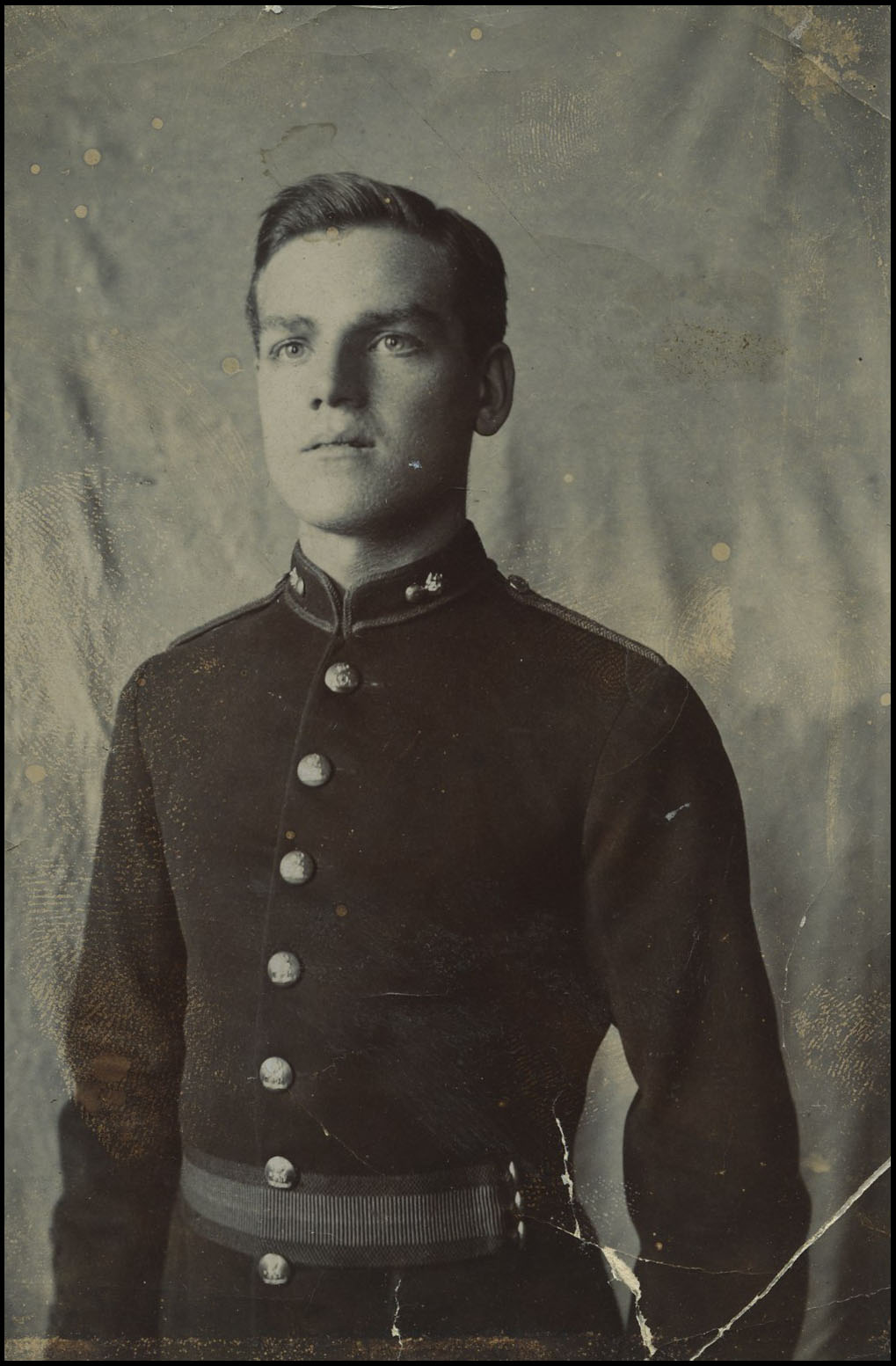
On the back is written ‘My Dad, aged 19 Royal Field and Horse Artillery. T. W. Boost MM, MSM. Photo taken in 1911’
Thomas William Boost was born on 7 February 1892 in Islington, London. He was the only son to William Henry Boost and Sarah Ellingham. William had been born about 1854 in Holloway, Middlesex and Sarah about 1846, also in Holloway. They married on 10 September 1877 in the parish church in the parish of St John the Baptist Hoxton in Middlesex. William was a bachelor, who was a Fruiterer living at 16 Canton Terrace. His father, Samuel Boost was also a Fruiterer. Sarah was a spinster, living at 137 Fonthill Road and her father Thomas was a Gardener. In the 1881 census they were living at 74 Settler Street, St Augustine Parish. William was a ‘carman’, Sarah was a laundress and there was also a step daughter, Alice Ellingham, who was 9 and a scholar. Alice Emily Ellingham had been born in Islington and she died in May 1937 in the same parish. Ada Boost was born on 28 April 1881 in Old End Town, London and died on 16 October 1964. Florence Maud Boost was born about 1883 in Islington. Amy Boost was born on 21 March 1885 in Islington. She died in 1966 in St Albans, Hertfordshire, England. Louisa Boost was born on 21 May 1887 in Islington and died in October 1973 in the same parish. Then William was born and last was Lilian May Boost, born on 30 December 1896 in Islington. In the 1901 census they were living at 3 Middlesex Street, Islington, London. William was a horse keeper groom, Ada, Florence and Amy were all listed as ‘laundry’ and Louisa was a domestic servant. By the 1911 census, they were living at 63 Alsen Road, Finsbury Park. William was listed as a ‘Carman Naval Pensioner’, but no record of his naval service has been found. Sarah was a charwoman, Thomas was ‘out of work (Carman)’ and Lilian was a ‘servant (House)’.
An entry in the Royal Artillery Attestation records shows Thomas William Boost joined in 1911 at Mill Hill. Unfortunately, his service records seem to have been destroyed, so his service information is incomplete. He served with the Royal Artillery at some time before WW1 in India.
147th Brigade RFA, as part of 29th Division, was not landed on Gallipoli until between 28 and 30 April at Cape Helles. It consisted of 10th, 97th and 368th Batteries, each with 4x 18 pounders.
The museum has the book History of the Royal Regiment of Artillery. The Forgotten Fronts and the Home Base 1914-18 by Sir Martin FARNDALE.
An entry in that book lists the 29th Divisional Artillery, and shows that ‘Boost, T. W., 65749, Bombr., 10th Battery, R.F.A’ at ‘Gallipoli, 1915. – For excellent work mending and relaying telephone wires at all times, especially on the night of the 1st/2nd May under heavy rifle fire. (M.M. 11/11/16).’ Another entry reads – ‘May 1915. On the night of the 1st/2nd the Turks made a violent counterattack against the French and ourselves. Several of our trenches were evacuated. Later on, on ‘May 2nd. By 04.30 the Turks were in full retreat and were shelled effectively by “B” and “Y”, who covered the advance of the French. Our casualties in telephonists this day were severe. The 15th Brigade lost 9 of theirs and the 460th Battery 3 in the process of laying cables.’
Another entry reads: ‘Nevertheless during this period 10th Battery, 147th Brigade RFA, reported on 13th May at 1730 hours “Opened on large body of Turks advancing from right to left”.
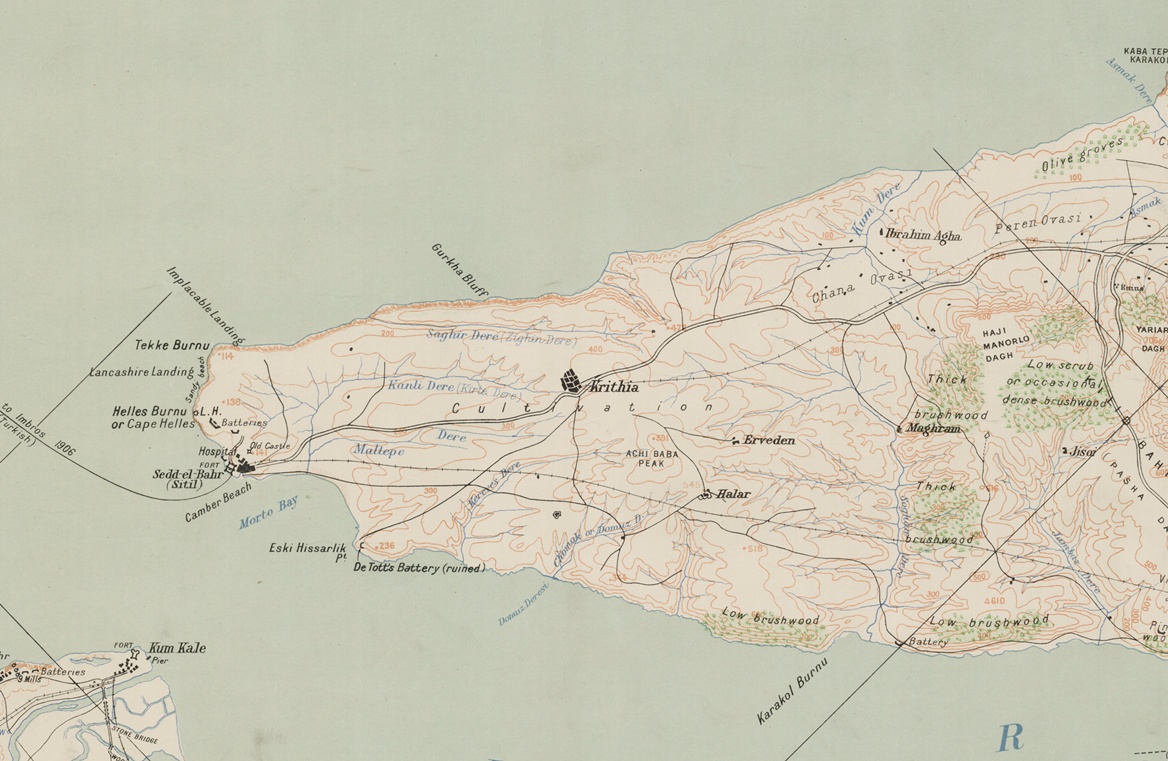
Above map showing where the British landed at Gallipoli and the next sketch is from a war dairy showing the position of units of the 147th Brigade RFA on 20th October 1915.
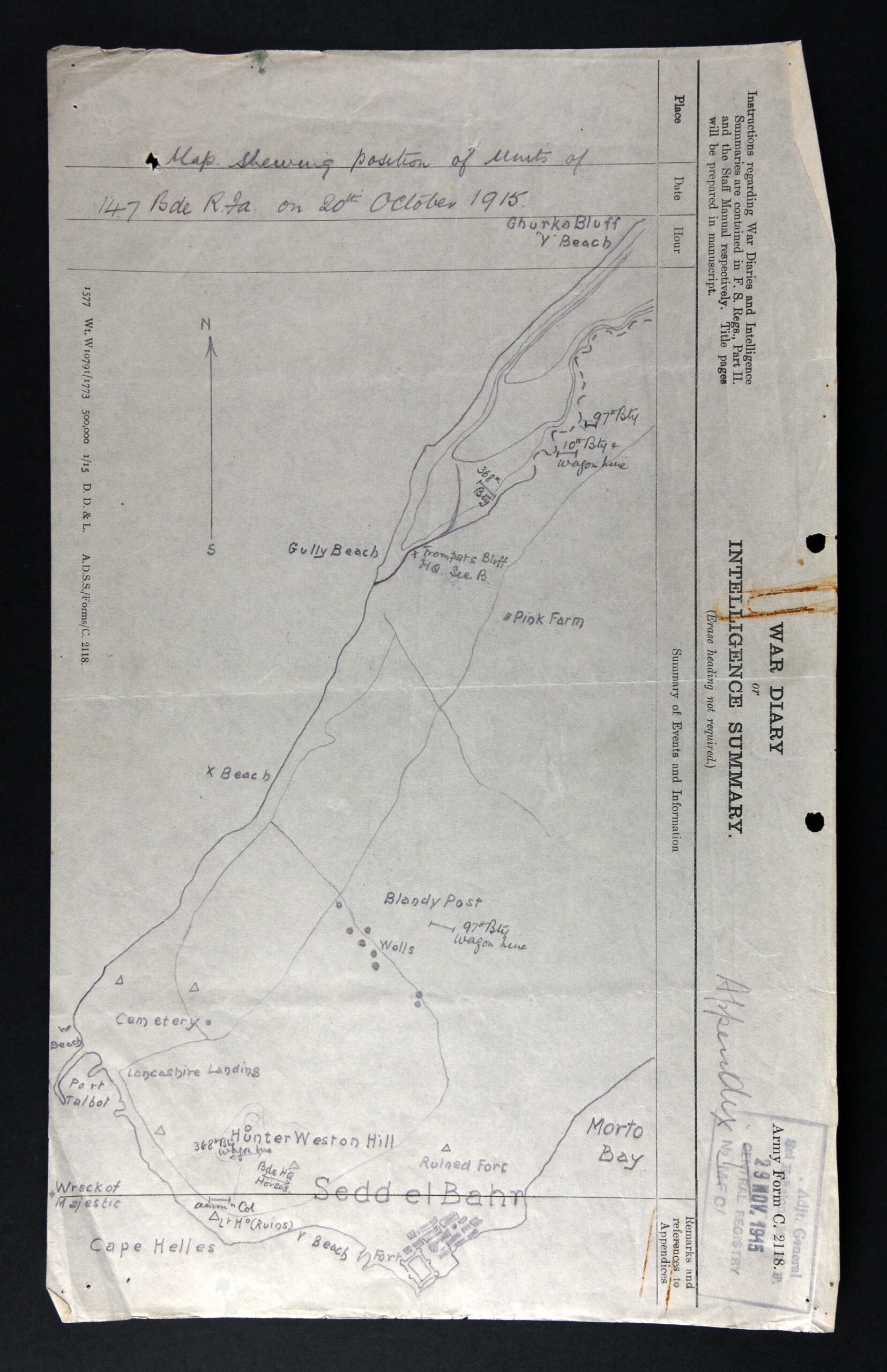
Prior to 17 October 1915 the War Diary was not in the hands of the Lieutenant Colonel Commanding the Brigade, so no individual records were kept. On that date, ‘10th Battery RFA (Temp Capt. J.C. BATTEN)’ was ‘on the top of the left bank of the SAGHIR DERE (THE GULLY). The horses were picketed on terraces, cut into the face of a bank, a good deal below the gun positions. Quite a good position, as positions go on the GALLIPOLI PENNINSULA (Southern end).’
An entry in the War Diary for 19 October 1915 reads: ‘the positions of the various units of the Brigade were as follows: – Brigade Hdqrs on Hill 138 (CAPE HELLES) personnel & horses complete. 10th Battery RFA (Temp Capt J.C. BATTEN) on the top of the left bank of the SAGHIR DERE (the GULLY). The horses were picketted (sic) on terraces cut into the face of the bank, a good deal below the gun positions. Quite a good position, as positions go on the GALLIPOLI PENNISULA (Southern end).’
The artillery book above also records ‘Minor actions continued on all fronts throughout September, October and November and it became clear that the Turks were also suffering; excellent in defence, they did not like to attack. For the gunners life was extremely difficult in the open gun positions. Casualties and sickness took a heavy toll; ammunition was short but the calls for fire were many.’ In November ‘a Turkish attack was beaten off on the left by shrapnel from the 147th Brigade RFA “… directly the left their trenches they hardly managed to get over their parapets.”
In the War Dairy for 9 January 1916 at 9 am it records as ‘Z Day’. ’28 rnds were fired on the LABRINTH to retaliate. This was the last time the 10th Battery fired on GALLIPOLI PENNISULAR (sic). The last 18pr gun left its position at 18.26’.
On the night of the 7/8 January 1916 the Division was evacuated from Helles and moved to Egypt, concentrating at Suez. The whole of the 10th Battery was evacuated by the early hours of 9 January. They arrived at Suez from 16 January over the next few days. The War Diary shows that for Other Ranks, sixteen were killed at Gallipoli and thirty-nine wounded. In March, they moved to France.
It is not known when Thomas transferred from 10th Battery RFA to 36th Divisional Ammunition Column.
In the book The History of the 36th Ulster Division by Cyril Falls, it mentions ‘One question which received much attention and gave rise to much discussion was that of a Divisional Artillery. It was reluctantly decided not to raise one in Ulster, though this meant losing many an Ulsterman to other Divisions. The U.V.F. had no artillery and consequently no partially trained force upon which to draw. It was thought that the raising and training of artillery in Ulster would take so long that it might delay the departure to the front of the Division for several months. In those days, it will be remembered, the one feverish anxiety of the men of the New Armies was lest the war should be over ere they were able to play their part in it! In the event, as will later be explained, the Division went to France in advance of the Artillery that had been raised for it, with a Territorial Artillery attached.’ It goes on to say ‘The 36th Divisional Artillery was raised, six months after the rest of the Division, in the suburbs of London, though from quarters stranger to one another than towns fifty miles apart in Ireland. The 153rd and 154th Brigades R.F.A. were formed by the British Empire League, of which one of the moving spirits was General Sir Bindon Blood. They were recruited chiefly from Croydon, Norbury, and Sydenham. The 172nd and 173rd Brigades, on the other hand, came from North-east London. They were formed on the initiative of the Mayors of East and West Ham and recruited from those districts.’
The first date recorded in the Artillery annals is that of May the 5th, 1915, when ‘sixty recruits of the 153rd Brigade assembled at 60, Victoria Street, the headquarters of the British Empire League, and marched to Norbury, where they were billeted in private houses. Londoners from South and North did not meet until July, when the four Brigades and the 36th Divisional Ammunition Column were moved to Lewes. It was within a few days of the arrival of the rest of the Division, already at a high standard of efficiency, in England, that serious training of the Divisional Artillery really began.’
The War diaries for 36th Division Royal Horse Artillery and Royal Field Artillery, Commander Royal Artillery are available to be viewed, and the following are some notes from them. The 36th Divisional Ammunition Column landed at Havre in France on 27 November 1915 at 11am and arrived at Port Remy the next day. It then moved to Villers-sur-Ailly. On 1 July 1916 a raid near Thiepval was supported by the 36th Divisional Artillery, with Copy number 28 being sent to 36th Divisional Artillery Column of the attack plans for their roll. A lot of the war diaries record daily events as ‘nothing to report’.
The Supplement to the London Gazette of 10 November 1916, published on Saturday 11 November from the War Office has a listing of ‘His Majesty the KING has been graciously pleased to award the Military Medal for bravery in the field to the undermentioned Non-Commissioned Officers and Men:- (which includes an entry for) ‘65749 Cpl. T. W. Boost, R.F.A.’ on page 10918.
The Supplement to the London Gazette of Friday 17 January 1919, on 18 January shows /His Majesty the KING has been graciously pleased to approve of the award of the Meritorious Service Medal to the following Warrant Officers, Non-Commissioned Officers and Men, in recognition of valuable service rendered with the Armies in France and Flanders. Under the sub-heading of Royal Field Artillery on page 972 is listed ‘65749 Sjt. Boost, M.M., T. W., 36th D.A.C. (Finsbury Park, N.).’
The first theatre of war that Thomas entered into was 2(A) Balkan on 28 April 1915, according to his Medal Index Card, as a Gunner in the Royal Field Artillery with the service number 65749. The medal roll for his 1914-15 Star, in Roll RFA/198B on page 19505, records him as being in the Royal Field Artillery as Gunner 65749 Thomas William Boost, with a date of disembarkation as 28 April 1915 but ‘(2b)’ was recorded after that. It was recorded at Woolwich on 12 November 1919. In the medal roll for the Victory Medal and/or British War Medal for the Royal Field Artillery, in Roll 5 A&B on page 4846, he is recorded as 65749 Sergeant Thomas William Boost MM. They were recorded at Woolwich on 11 March 1920.
Corporal Thomas William Boost of 36 Division Ammunition Column, Royal Horse Artillery and Royal Field Artillery MM and MSM. He was promoted to Sergeant at some stage and that rank is recorded on his Military Medal and British War and Victory medals. He was awarded the Meritorious Service Medal as Sergeant 65749 Thomas William Boost of RFA 36th Divisional Ammunition Column, with a medal card recorded the ‘Date of Gazette’ as ‘60’ and Registered Paper as ‘0137/5358’ and ‘227303’.
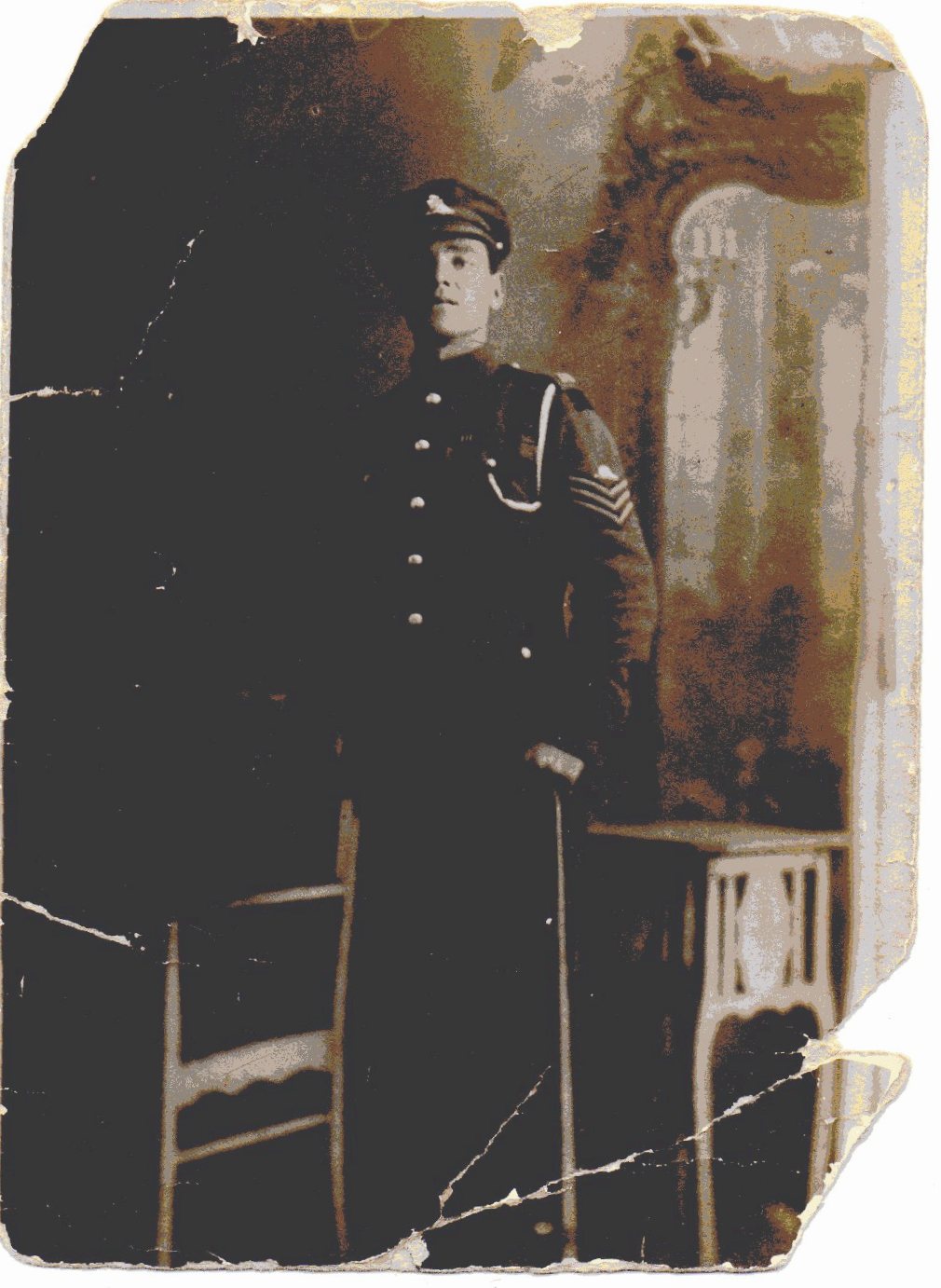
On back is written ‘My Darling Dad taken on leave from France after being wounded. (First World War) 1914-1918. T. W. Boost MM MSM 1892-1947’
In the record Royal Artillery Attestations 1883-1942, Thomas was issued with the Army Number 1006444. (This was issued after WW1, so he was obviously still serving then. Following World War I, the British Army introduced a standardized, army-wide numbering system under Army Order 338 of August 1920. Instead of regiments and corps assigning their own overlapping numbers, a continuous block-allocation system was implemented. Every serving regular soldier was issued a unique seven-digit service number, which they retained regardless of transfers. The Royal Artillery (Field, Coastal & Anti-Aircraft) were issued the ranges 721001 – 1842000 and 11000001 – 11500000.) In the next column, headed ‘R.’, ‘M.’, ‘S.R.’, ‘T.’, Thomas is listed as R (which could stand for Reserve?). It states his full name as Thomas William Boost, date of attestation on 27th June 1911, age on attestation as 21/4 (years/months) and place of attestation as Mill Hill. His trade on enlistment was Town Carman (Given the census in 1911 lists him as an out of work carman, this may have been the incentive to enlist.). It recorded his place of birth as Parish of Holloway and Town of London, Middlesex. He was noted as being unmarried, with his next of kin as his mother, Sarah, of 63 Alsen Road, Finsbury Park.
A pencil note on his line under the heading of ‘Period of Mobilized or Embodied Service’ has the dates 9/4/21 – 5/6/21.
Under the heading of Campaigns, Wounds, Medals or Rewards of any kind is recorded ‘MM sup. London Gazette 9/11/16, France 1915-18-19 M.S.M. S.L.Gaz (Supplement to London Gazette) 18-1-19, Medit 1915, 1914&15 Star 26.6.23, B War & Victory. India 1912-14.’
Under the major heading of Discharge or becoming non-effective recorded for Date is 26.6.23, Place is Woolwich, Cause is Dis. T. of E. 1st pd (cause of discharge term of enlistment first period?), Rank and Character on Discharge Sgt Exemplary, Rate of Pension Awarded (if any) (nothing recorded), Address on Discharge 10 Lann…? Rd (maybe Lennox Road?) Finsbury Pk N4. Underneath the cause of discharge are two codes, B2074/2410 and B2067/W5241. There is nothing under the heading of ‘Particulars of former service Giving Corps and No’, but Remarks has RHorRFA Former No. 65749 and a red triangle with 21/7 inside it.
King’s Regulations Paragraph 32 (a) was used for discharge due to the termination of a soldier’s engagement or service within the Army Reserve.
In the 1921 census, William is living at 10 Lennox Road with the Cottrell family and is listed as uncle, single and a ‘fitters labourer’, working at George Mann and Co, Printer Engineers at 4 Henry Street, ‘Grays Inn Road’.
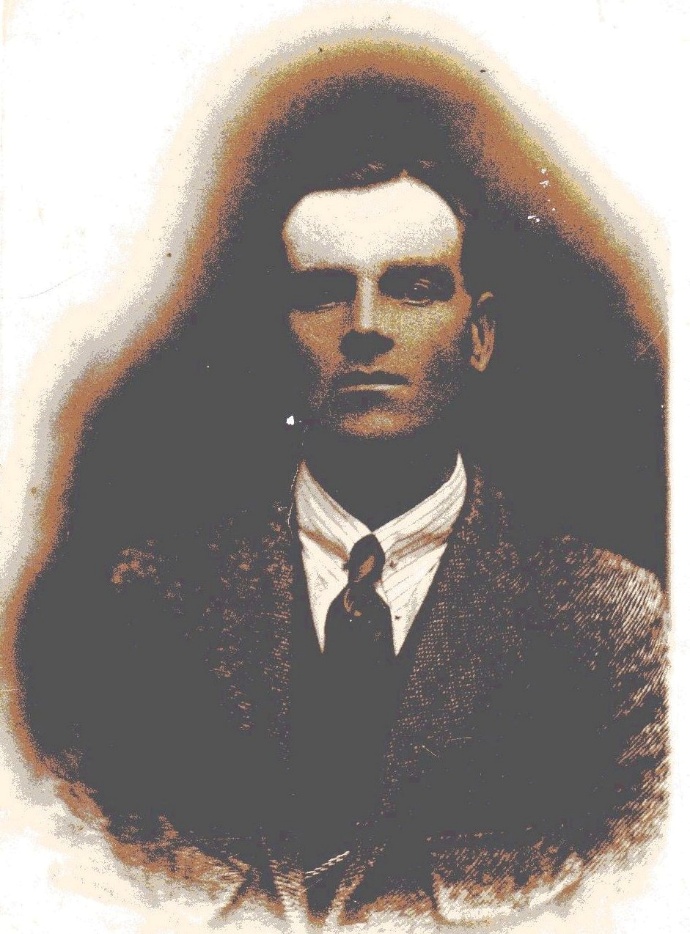
‘T. W. Boost 1920’s’ written on back.
He married Maud Humberstone in the April quarter of 1926 in Islington, London. On 23 October 1926 Phyllis Boost, their daughter, was born.
By the 1935 electoral register they were living at 39 Bedford Terrace, Islington. In the 1939 register, they were still living at 39 Bedford Terrace. Thomas was recorded as a ‘painters engineer’ (in red beside it is ‘heavy work’), Maud was an unpaid domestic and Phyllis was at school.
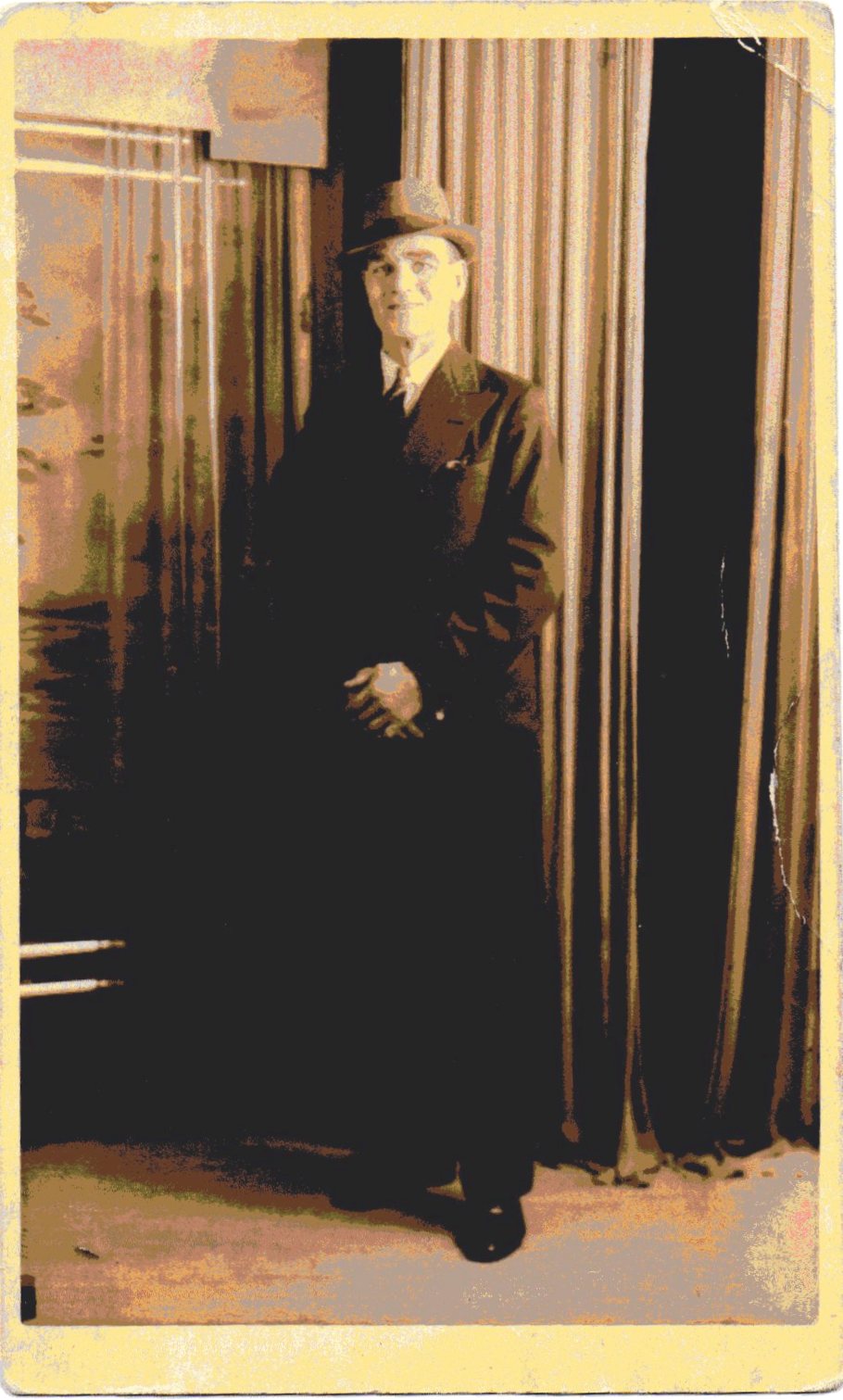
On the back is written ‘My Dear Dad 1892-1947 T. W. Boost MM, MSM 1930’s’
Thomas died in mid-1947 in Islington, London.
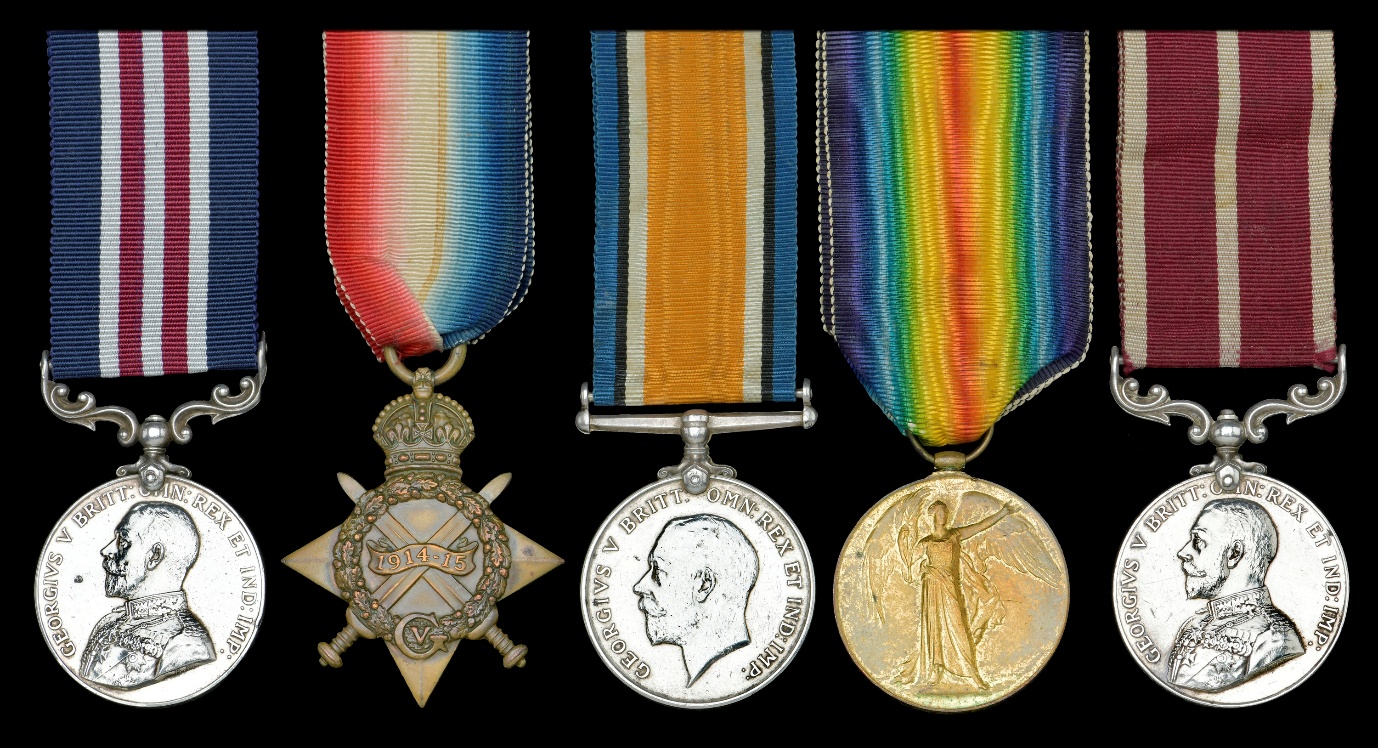
His medals are the Military Medal, 1914-15 Star, British War Medal, Victory Medal (with MID) and Meritorious Service Medal.
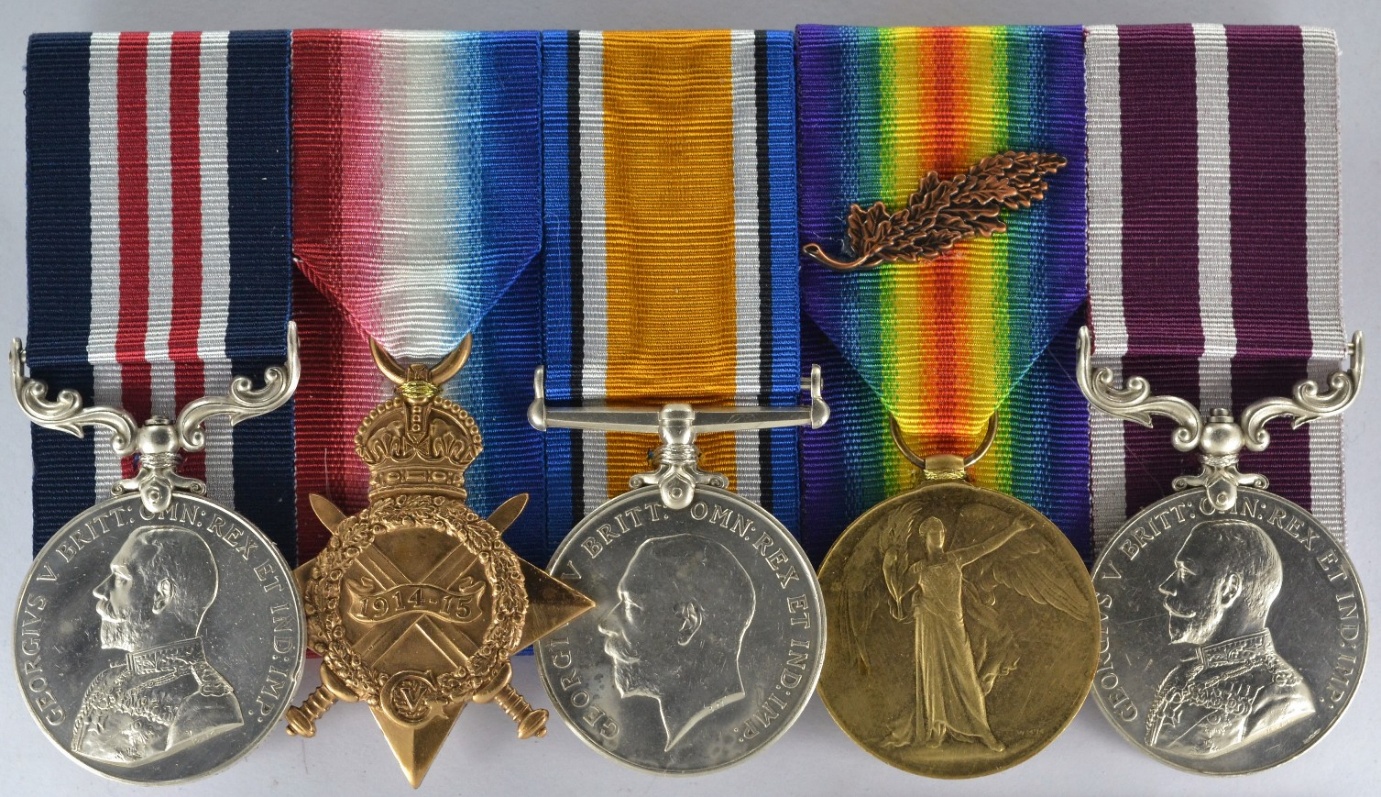
His medals as on display at the museum.